Here is a quick look at our pick for best TVs under $500 in 2026
| TV | Panel | Refresh Rate | Smart OS | HDMI 2.1 | Best For |
|---|---|---|---|---|---|
| Hisense QD7 | QLED Mini-LED | 60Hz | Fire TV | No | Best overall picture |
| Hisense U65QF | QLED Mini-LED | 144Hz | Fire TV | Yes (×2) | Gaming & sport |
| TCL QM6K | QLED | 144Hz | Fire TV / Google TV | Yes (×2) | Features + value |
| Roku Plus Series | LED | 60Hz | Roku TV | No | Simplicity |
| Samsung Q7F | QLED | 60Hz | Tizen | No | Samsung ecosystem |
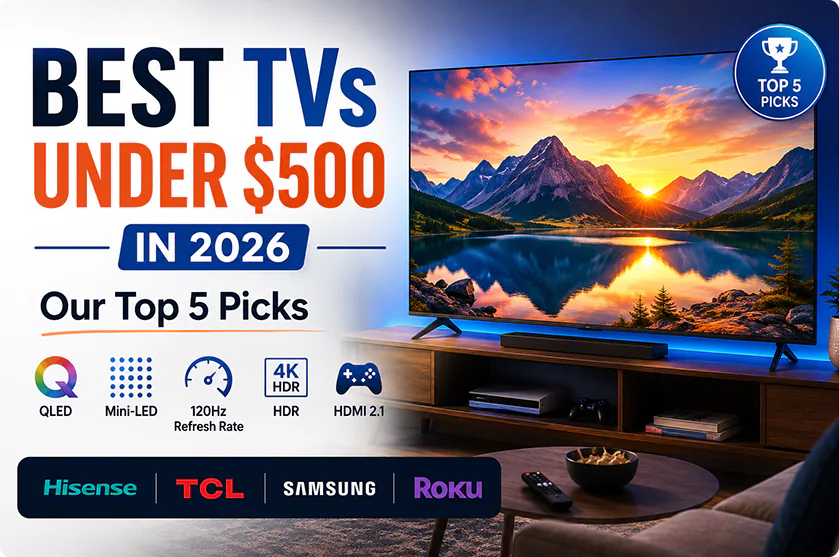
Here’s the thing about budget TVs in 2026 — they’re actually good now. Like, really good. It wasn’t long ago that spending $500 on a TV meant settling for a 1080p panel, washed-out colours, and a smart TV interface that crashed every other week. But the budget TV game has changed dramatically, and the best TVs under $500 in 2026 can genuinely hold their own against sets that cost twice as much.
Whether you’re kitting out a spare room, upgrading a living room TV, or just want a cracking second screen for sports and gaming — there’s never been a better time to spend under $500 and walk away happy. We’ve pulled together the five best TVs under $500 in 2026 you can buy right now in 2026, covering a range of use cases so you can find the one that fits your life.
What to Look for in a TV Under $500
Before we jump into the picks, it’s worth knowing what actually matters at this price point — because manufacturers love to throw around buzzwords that mean very little in practice.
Panel Technology: LED, QLED, or Mini-LED?
Most TVs under $500 use LED/LCD panels — and that’s completely fine. Where things get interesting is when you start seeing QLED (quantum dot LEDs) and Mini-LED options creeping into this price bracket. Both technologies improve colour accuracy and brightness over standard LED, and Mini-LED in particular offers dramatically better contrast thanks to having thousands of tiny LED zones that can be individually dimmed.
You won’t find OLED at this price — and you don’t need it. A well-implemented Mini-LED or QLED at $500 is just fine..
Refresh Rate: 60Hz vs 120Hz vs 144Hz
The refresh rate tells you how many times per second the image on screen is updated. For watching films and TV shows, 60Hz is absolutely fine. But if you’re a gamer or you want the smoothest possible picture during fast-paced sport, you’ll want to look for 120Hz or 144Hz. At this price, 144Hz is becoming available – and it’s worth hunting for if gaming or sport is your thing.
HDR Support
High Dynamic Range (HDR) makes bright highlights look brighter and dark shadows look deeper. The main formats to look for are Dolby Vision (the gold standard), HDR10+, and plain old HDR10. If a TV claims to support HDR but can’t actually get bright enough to show it properly, it’s largely pointless — so we’ll always call out real-world brightness in our picks below.
Smart TV Platform
The operating system on your TV matters more than people realise — you interact with it every single day. The best platforms in 2026 are Google TV (intuitive, has everything), Roku TV (dead simple), and Tizen (Samsung’s clean, fast system). The one you’ll see most on budget sets – Amazon Fire TV – is functional, but it’s slow, plastered with ads, and constantly pushing Amazon’s content. It’s not a deal-breaker, but it’s worth knowing about.
HDMI 2.1 Ports
If you’re a PlayStation 5 or Xbox Series X gamer, you want HDMI 2.1 ports. These support 4K at 120Hz (or 144Hz), which means you’re getting the full picture your console can output. Not every budget TV has them — so we’ll flag which of our picks do.
Best TVs Under $500 in 2026 — Our Top 5 Picks
Right then. Here are the five best TVs under $500 in 2026 you can buy right now — tested, reviewed, and ranked for different needs and use cases.
1. Hisense QD7 Mini-LED — Best Overall TV Under $500
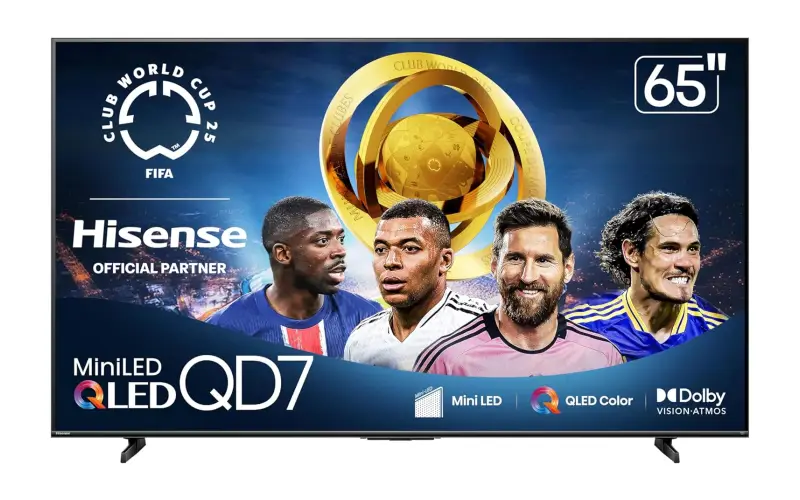
Hisense QD7 Mini-LED

If you want one recommendation and nothing else, this is it. The Hisense QD7 is genuinely one of the best TVs you can buy right now — full stop — and the fact that it costs under $500 makes it extraordinary value.
The QD7 uses a quantum dot Mini-LED panel, which means you’re getting the kind of colour and contrast performance that would have cost $800+ just two years ago. Quantum dot crystals absorb part of the LED backlight and re-emit it as more precise red and green wavelengths, producing richer, more vibrant colours. Mini-LED backlighting means the TV can dim individual zones independently — making dark scenes look genuinely deep and detailed, rather than that muddy grey you get with cheaper panels.
We watched everything from dark, moody films to bright HDR sport on the QD7, and it handled all of it impressively well. Colour accuracy is pleasingly natural out of the box; upscaling of non-4K content is excellent; and the audio is surprisingly decent for a budget TV — louder and fuller than most at this price. Surely the overall pick in the best TVs under $500 in 2026 list.
The main compromise? It only has a 60Hz refresh rate, which is fine for films and general TV but not ideal for fast gaming or sport. And Hisense loaded it with Amazon Fire TV software in the US, which is sluggish and ad-heavy. However, once your streaming apps are installed, you barely need to look at the home screen anyway. The picture quality more than compensates.
Specifications
| Spec | Detail |
|---|---|
| Screen Type | QLED Mini-LED |
| Resolution | 4K (3,840 × 2,160) |
| HDR Support | Dolby Vision, HDR10+, HDR10, HLG |
| Refresh Rate | 60Hz |
| Smart Platform | Amazon Fire TV |
| HDMI Ports | 4× HDMI 2.0 (1× eARC) |
| Sizes Available | 50″, 55″, 65″ |
✅ Pros: Outstanding colours and contrast for the price, great upscaling, Dolby Vision support, surprisingly good audio, good range of sizes.
❌ Cons: Only 60Hz (not ideal for gaming or sport); the Amazon Fire TV interface is slow and pushy.
Best for: Most people — the all-round winner for movies, TV shows, and everyday use.
2. Hisense U65QF Mini-LED — Best for Gaming and Sport
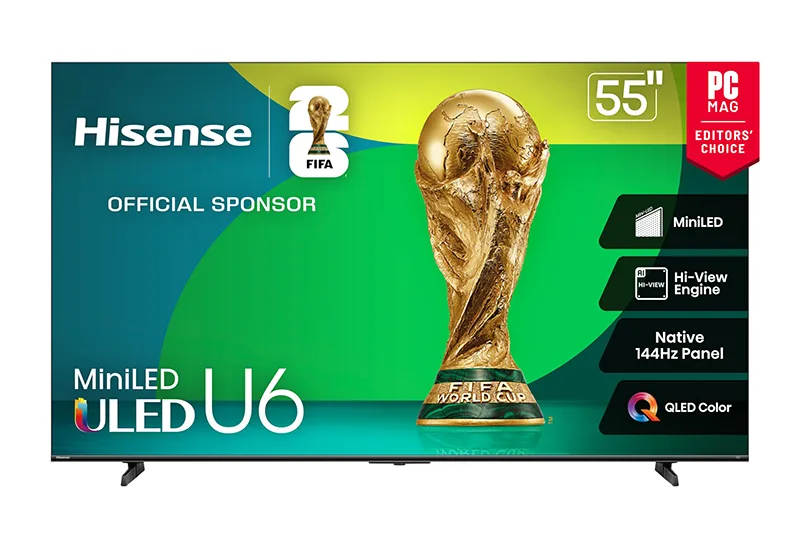
Hisense U65QF Mini-LED
The Hisense QD7 is the better all-rounder on the best TVs under $500 in 2026 list, but the Hisense U65QF is the one to buy if gaming or sport is a priority — and it slips in at just under $500 for the 55-inch version.
The standout feature here is the 144Hz refresh rate, which gives you dramatically smoother motion than the QD7’s 60Hz — you’ll notice it immediately in fast sports and action scenes. Better still, it comes with two HDMI 2.1 ports, which means PS5 and Xbox Series X gamers can take full advantage of 4K at 120Hz output. It also supports Auto Low-Latency Mode (ALLM), which automatically switches the TV into game mode when you connect a console – reducing input lag without you needing to dig through settings menus.
In lab testing, the U65QF was actually found to be significantly brighter than the QD7 on HDR content, which makes it a better choice if your room gets a lot of natural light during the day. The gamer’s choice on the best TVs under $500 in 2026 list.
Where it trails the QD7 is in colour accuracy and overall image finesse for cinematic content. It’s a great TV, but it’s optimised for motion performance rather than pure picture quality. The Fire TV platform makes another appearance here too — same downsides as the QD7 on that front.
Specifications
| Spec | Detail |
|---|---|
| Screen Type | QLED Mini-LED |
| Resolution | 4K (3,840 × 2,160) |
| HDR Support | Dolby Vision, HDR10+, HDR10, HLG |
| Refresh Rate | 144Hz |
| Smart Platform | Amazon Fire TV |
| HDMI Ports | 2× HDMI 2.1, 2× HDMI 2.0 |
| Sizes Available | 55″ (65″ slightly over $500) |
✅ Pros: 144Hz for smooth gaming and sport, HDMI 2.1 for PS5 and Xbox Series X, brighter than the QD7 on HDR content, ALLM support.
❌ Cons: Colour accuracy not quite as refined as the QD7, Fire TV software, 65″ version goes over budget.
Best for: Gamers and sport fans who need a high refresh rate on a budget.
3. TCL QM6K QLED — Best for Value and Features Combined
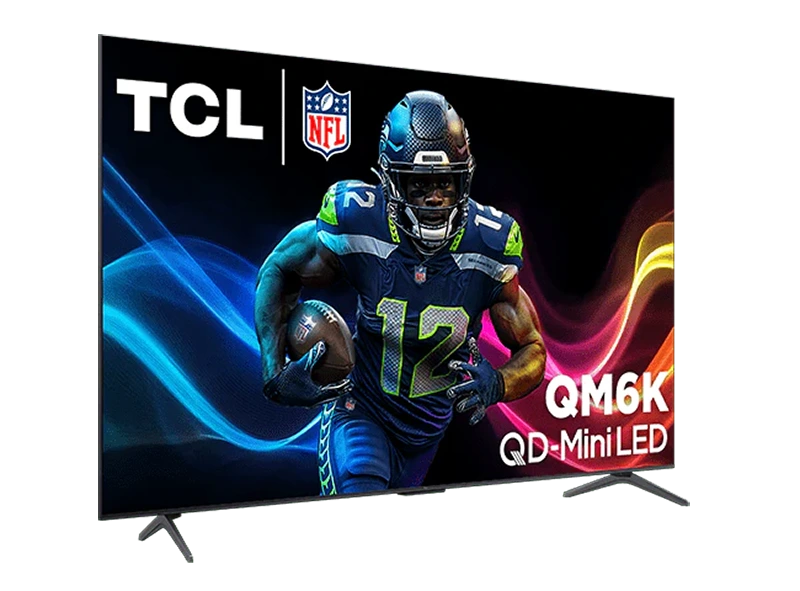
TCL QM6K QLED
TCL has built a brilliant reputation for delivering a lot of TV for not much money, and the TCL QM6K is a perfect example of exactly that. Until the Hisense U65QF came along, this was arguably the best sub-$500 TV you could buy, and it remains an outstanding option, particularly if you want Google TV instead of Fire TV.
The QM6K is a QLED TV with local dimming, delivering vibrant, punchy colors and decent contrast performance. It’s available in sizes up to 85 inches (though you’ll need to stay at 55″ or 65″ to stay under $500), and it runs Amazon Fire TV — though TCL has partnered with Google TV in some markets, so it’s worth checking what’s available in your region.
Performance-wise, the QM6K handles fast action well, supports Dolby Vision, and offers good HDR brightness for the price. TCL has also included a Game Accelerator feature that reduces latency in gaming mode, making it a viable option for casual gamers even if it doesn’t match the U65QF’s HDMI 2.1 spec sheet. One bonus worth mentioning: TCL’s audio is bolstered by a partnership with Bang & Olufsen, and the sound reproduction sits noticeably above average for a built-in TV speaker at this price – though a soundbar is still worth considering for movie nights.
If the Hisense QD7 is out of stock or outside your available budget in a particular size, the TCL QM6K is the natural alternative, and you won’t be disappointed.
Specifications
| Spec | Detail |
|---|---|
| Screen Type | QLED with local dimming |
| Resolution | 4K (3,840 × 2,160) |
| HDR Support | Dolby Vision, HDR10+, HDR10, HLG |
| Refresh Rate | 144Hz |
| Smart Platform | Fire TV (Google TV in some regions) |
| HDMI Ports | 2× HDMI 2.1, 2× HDMI 2.0 |
| Sizes Available | 55″, 65″, 75″, 85″, 100″ |
✅ Pros: Excellent colour and brightness, 144Hz and HDMI 2.1, Bang & Olufsen-tuned audio, wide range of sizes, great overall value.
❌ Cons: Light bloom visible in some scenes, viewing angles not the best, Fire TV in the US.
Best for: People who want a feature-packed set with solid all-round performance and excellent sound.
4. Roku Plus Series — Best for Simplicity and Ease of Use
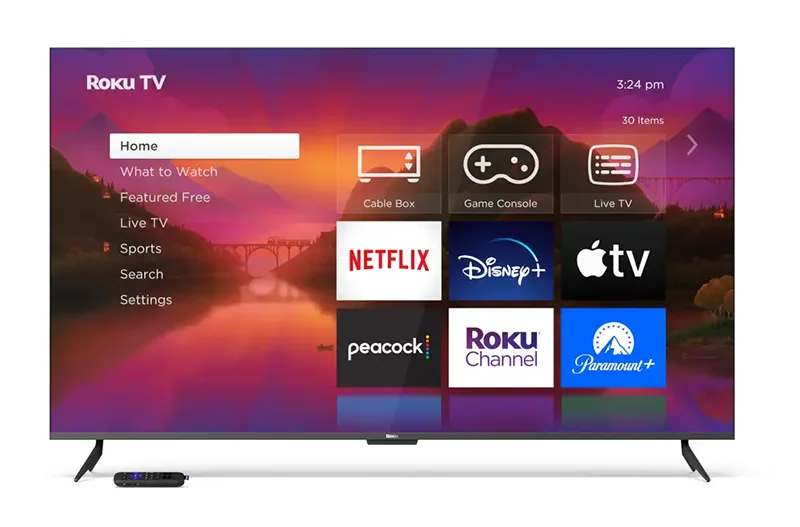
Roku Plus Series
Not everyone needs the fastest refresh rate or the most advanced panel technology. Sometimes you just want a TV that works — one you can unbox, set up in ten minutes, and use without ever needing to Google how to find the settings menu. If that sounds like you, the Roku Plus Series TV was practically made for you.
The Roku TV platform is the simplest and most intuitive smart TV experience available right now. Its home screen is clean, uncluttered, and genuinely easy to navigate. Additionally, there are no confusing submenus, no pushy recommendations for services you don’t use, and no bloatware to dig through. You just pick your streaming app and watch. It’s the closest thing to a plug-and-play TV that currently exists.
Beyond the software, the Roku Plus Series delivers a perfectly solid 4K HDR picture — not as dazzling as the Hisense QD7 or TCL QM6K, but genuinely good for everyday watching. Colours are accurate, the display is bright enough for normally lit rooms, and the overall experience is clean and uncompromised. It also comes with a private listening feature through the Roku app, which lets you pipe audio directly to your phone’s headphones — a genuinely useful addition for watching TV late at night without disturbing anyone. The top pick on the best TVs under $500 in 2026 for those looking for a simple setup.
For the price, it’s hard to fault. If you’ve ever been frustrated by a slow, confusing smart TV interface, the Roku Plus Series will feel like a breath of fresh air.
Specifications
| Spec | Detail |
|---|---|
| Screen Type | LED |
| Resolution | 4K (3,840 × 2,160) |
| HDR Support | Dolby Vision, HDR10, HLG |
| Refresh Rate | 60Hz |
| Smart Platform | Roku TV |
| HDMI Ports | 4× HDMI (1× eARC) |
| Sizes Available | 55″, 65″, 75″ |
✅ Pros: Roku’s best-in-class smart TV interface, dead simple to use, private listening feature, accurate colours, no bloatware or ads.
❌ Cons: Only 60Hz, standard LED panel (not QLED or Mini-LED), struggles in very bright rooms.
Best for: Non-technical users, families, and anyone who just wants the simplest, most frustration-free TV experience.
5. Samsung Q7F QLED — Best for Samsung Ecosystem Users
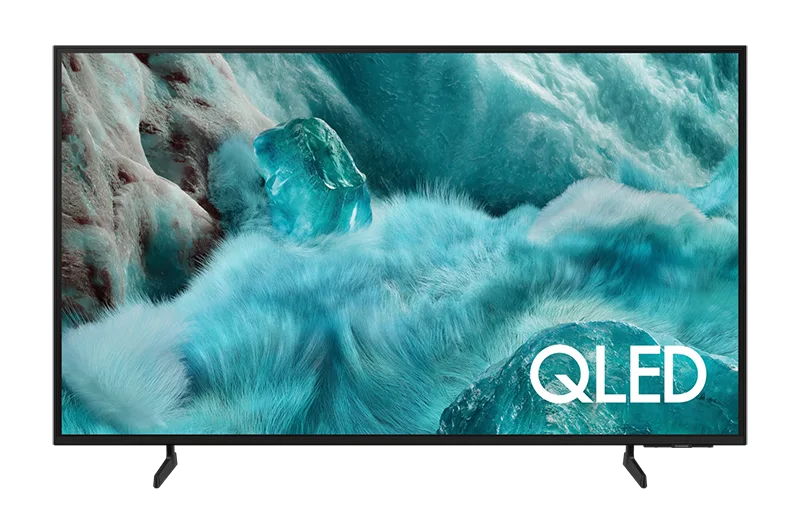
Samsung Q7F QLED
If you’re already in the Samsung smart home ecosystem — or you simply want a TV with a cleaner, more premium feel than the Hisense models — the Samsung Q7F deserves serious consideration. It won’t win a head-to-head performance test against the Hisense QD7, but it brings two things those Hisense sets can’t: Samsung’s Tizen OS and a build quality that just feels a cut above what you’d expect at this price.
Tizen is one of the best smart TV platforms available. It’s fast, well-organized, and deeply integrated with Samsung’s broader ecosystem of Galaxy devices, SmartThings home automation, and accessories. For Galaxy phone or tablet users, the SmartThings integration alone makes this a genuinely compelling pick — you can mirror your phone screen to the TV, control smart home devices through the same interface, and even use your Samsung phone as a remote control.
Picture quality is solid — the Q7F is a QLED set with Samsung’s own quantum dot technology, delivering vivid colours and good brightness for a normally lit room. It doesn’t match the Hisense QD7’s Mini-LED contrast, and it lacks HDMI 2.1 ports, but it handles most content well, and the image processing is reliable and consistent.
Samsung also launched the SamsungVision AI feature in 2025, which uses on-device AI to upscale lower resolution content and optimise picture settings in real time. In practice, it’s more impressive for upscaled streaming content than for native 4K, but it’s a nice addition that gives the Q7F a sense of forward-looking polish that the Hisense and TCL models don’t quite match.
Specifications
| Spec | Detail |
|---|---|
| Screen Type | QLED |
| Resolution | 4K (3,840 × 2,160) |
| HDR Support | HDR10+, HDR10, HLG |
| Refresh Rate | 60Hz |
| Smart Platform | Tizen (Samsung) |
| HDMI Ports | 4× HDMI 2.0 |
| Sizes Available | 55″, 65″ |
✅ Pros: Excellent Tizen OS (no ads, no bloat), Samsung ecosystem integration, SamsungVision AI upscaling, premium build quality, vibrant QLED colours.
❌ Cons: No Dolby Vision (HDR10+ only), no HDMI 2.1, only 60Hz — not the performance leader at this price.
Best for: Samsung Galaxy device owners and anyone who prioritises a clean, premium-feeling interface and ecosystem over raw specs.
Quick Comparison: Best TVs Under $500 in 2026
| TV | Panel | Refresh Rate | Smart OS | HDMI 2.1 | Best For |
|---|---|---|---|---|---|
| Hisense QD7 | QLED Mini-LED | 60Hz | Fire TV | No | Best overall picture |
| Hisense U65QF | QLED Mini-LED | 144Hz | Fire TV | Yes (×2) | Gaming & sport |
| TCL QM6K | QLED | 144Hz | Fire TV / Google TV | Yes (×2) | Features + value |
| Roku Plus Series | LED | 60Hz | Roku TV | No | Simplicity |
| Samsung Q7F | QLED | 60Hz | Tizen | No | Samsung ecosystem |
Which TV Under $500 Should You Actually Buy?
We know it can be tempting to just scroll to the bottom of a list like this and pick the top one — so let’s make this as simple as possible.
For most people, get the Hisense QD7. It’s the best-performing TV under $500 right now for movies, shows, and general use. The picture quality is exceptional for the price, and you’ll genuinely love how good it looks once you’ve set it up. Additionally, the Fire TV interface is annoying, but you get used to it quickly enough.
If gaming or sport is your thing, go for the Hisense U65QF. The 144Hz refresh rate and HDMI 2.1 ports make it the right tool for the job, and it’s brighter than the QD7 in HDR. Great for the 2026 World Cup too.
Want the cleanest, least stressful setup experience? Go for the Roku Plus Series. It’s not the performance king, but the Roku platform is so much nicer to use day to day that it’s worth the trade-off for many people.
Already deep in the Samsung ecosystem? The Q7F is the move. You’ll appreciate the Tizen integration in ways that spec sheets can’t capture.
And if you can’t decide between the Hisense QD7 and the TCL QM6K? Honestly, go with whichever is cheaper or in stock at the time — they’re both brilliant TVs at a price that would have seemed impossible just a few years ago.
Frequently Asked Questions
Is $500 enough for a good TV in 2026?
Absolutely. The sub-$500 TV market in 2026 is genuinely impressive. You can get a large-screen 4K TV with Mini-LED backlighting, Dolby Vision HDR, and a 144Hz refresh rate for under $500 — specs that were firmly in the $800–$1,000 bracket just a couple of years ago. Budget TVs no longer mean budget compromises on picture quality. Get good deals on amazon website.
Should I wait for Black Friday or Prime Day deals?
If you can wait, it’s often worth it — especially for the bigger screen sizes. TVs frequently drop $50–$150 during Amazon Prime Day (July) and Black Friday (November). That said, 2025 models are already being discounted in mid-2026 as retailers clear inventory for new releases, so right now is actually a decent time to buy.
What’s the best TV size under $500?
For most living rooms, a 55-inch or 65-inch TV is the sweet spot. At these sizes you’ll comfortably find good options within the $500 budget. If you need something larger than 65 inches, you’ll typically need to go slightly over budget or wait for a sale.
Do I need HDMI 2.1 for gaming?
Only if you want to play at 4K 120Hz on a PS5 or Xbox Series X. For 1080p or 4K at 60Hz gaming, regular HDMI 2.0 works absolutely fine. But if you’ve invested in a current-gen console and want to take full advantage of it, look for at least two HDMI 2.1 ports.
Is a soundbar necessary with a budget TV?
The built-in speakers on budget TVs have improved a lot, and the Hisense QD7 and TCL QM6K (with its Bang & Olufsen tuning) are both surprisingly decent. But if you watch a lot of films or want proper audio immersion, a basic soundbar — even a budget one — will make a noticeable difference.
Final Thoughts
The budget TV space in 2026 is in a genuinely exciting place. Five years ago, spending under $500 meant making real compromises. Today, the Hisense QD7 and U65QF punch well above their weight class, the TCL QM6K gives you features that most people would happily pay $700 for, and the Roku Plus Series makes setting up a TV easier than it’s ever been.
You don’t need to spend a fortune to get an excellent TV in 2026 — you just need to know what to look for. And now you do.
Got questions about any of the TVs on this list or trying to decide between two models? Drop a comment below and we’ll help you work it out. We read every single one!
You can also check out our earlier list of 2024 best TVs under $500 here.